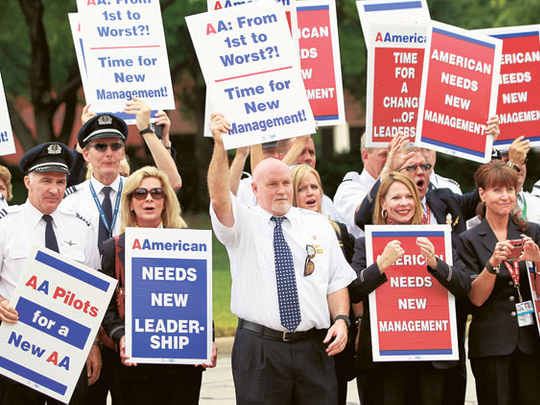
When United Airlines CEO Scott Kirby publicly rebuked American Airlines for refusing to engage in merger discussions, it wasn’t just corporate theater—it was a calculated signal of growing frustration in an industry stretched thin by post-pandemic recovery, rising operational costs, and shifting consumer behavior. Kirby’s remarks, delivered during a high-profile industry forum, cut deeper than typical executive posturing. They revealed a strategic divergence that could reshape the U.S. airline landscape.
The refusal by American Airlines’ leadership to even entertain talks isn’t just about pride—it’s about control, timing, and a fundamental disagreement over what consolidation can achieve. While United sees scale as a path to resilience, American appears to believe independence offers more maneuverability in a volatile market.
This isn’t the first time merger speculation has swirled around the two carriers. But this time, the tone is different. The confrontation suggests a broader rift over the future of airline consolidation—and who gets to define it.
Why United Wants a Merger—And Why Now
United Airlines has been aggressively pursuing operational efficiency and global reach for years. Its investments in long-haul fleets, premium cabins, and international alliances reflect a strategy built on scale. A merger with American Airlines—the world’s largest carrier by fleet size and passenger traffic—would instantly amplify that strategy.
For United, the logic is threefold:
- Route Network Synergy: Combining United’s strength in transpacific and transatlantic routes with American’s dominant presence in Latin America and domestic hubs (like Dallas and Charlotte) would create a near-unmatched global footprint.
- Cost Optimization: Duplicate functions—IT systems, customer service operations, maintenance hubs—could be streamlined, potentially saving billions over a decade.
- Loyalty Program Leverage: Merging MileagePlus and AAdvantage would create the most powerful frequent flyer ecosystem in North America, a valuable asset for financing and partnerships.
But timing is critical. With air travel demand fluctuating and fuel prices volatile, United sees a window where consolidation could provide stability. As Scott Kirby noted, “In times of uncertainty, scale isn’t just an advantage—it’s a necessity.”
American’s Resistance: Independence Over Integration
American Airlines isn’t rejecting the idea of growth—but it’s choosing a different path. Leadership, including CEO Robert Isom, has repeatedly emphasized that American is focused on internal transformation, not external combination.
Their stance rests on several pillars:
- Ongoing Turnaround Efforts: American has spent years rebuilding its operational reliability after a series of high-profile disruptions. Merging now could derail progress.
- Cultural Concerns: Integrating two massive workforces with different union structures and corporate cultures poses significant risk. American’s leadership fears employee morale and service quality could suffer.
- Regulatory Hurdles: A merger between the two largest U.S. carriers would face intense scrutiny from the Department of Justice and the Department of Transportation. The probability of approval is low without massive divestitures.
In private discussions, American executives have reportedly argued that organic growth—through fleet upgrades and improved customer experience—is more sustainable than a forced merger.
The Real Stakes: Competition, Consumers, and Consolidation

At the heart of this clash is a larger debate about the direction of the airline industry. After decades of consolidation—Delta-Northwest, United-Continental, American-US Airways—the U.S. market is now dominated by four major carriers. Adding another layer could reduce competition, especially on key domestic routes.
Consider this: on nonstop flights between New York (JFK) and Los Angeles (LAX), United and American together account for over 60% of daily departures. A merger would turn that duopoly into a monopoly in all but name, with limited alternatives for travelers.
Consumer advocates warn that less competition means higher fares, fewer choices, and reduced service quality. The U.S. has already seen average domestic airfares rise 15% since 2019, even as capacity has recovered. Another major merger could accelerate that trend.
But United’s position reflects a counter-argument: that only large, financially robust carriers can invest in innovation, sustainability, and customer experience. Smaller players struggle to fund new aircraft, upgrade digital platforms, or compete with low-cost carriers on price.
Behind the Rhetoric: What Kirby’s Comments Reveal
Scott Kirby didn’t mince words. After American declined to respond to informal overtures, he went public, saying American’s refusal “defies logic” and “prioritizes ego over the long-term health of the industry.”
That kind of language is rare among airline CEOs, who typically avoid public feuds. Kirby’s outburst suggests either desperation—or a deliberate strategy to pressure American into negotiations by appealing to investors, regulators, and the public.
It’s also possible that United is using the merger talk as leverage. Even if a full merger never happens, the threat could push American to consider other forms of collaboration—joint ventures, shared routes, or technology partnerships—on terms more favorable to United.
Kirby’s background as a former executive at American adds another layer. He knows the carrier’s weaknesses and strengths intimately. His criticism isn’t random; it’s surgical.
Regulatory Reality: Why a Merger Is Unlikely
Even if both airlines agreed, the odds of a merger clearing antitrust review are slim. The U.S. government has shown increasing skepticism toward big business combinations, especially in sectors with limited competition.
Key barriers include:
- Market Concentration: The top four airlines control over 80% of domestic capacity. Adding United and American would push that even higher.
- Slot Constraints: At major airports like Reagan National (DCA) and LaGuardia (LGA), slot allocations are already tight. A merged carrier would likely be forced to surrender key routes.
- Labor Opposition: Major unions, including the Allied Pilots Association and Association of Flight Attendants, would resist integration, fearing job cuts and contract erosion.
The Department of Justice blocked the proposed JetBlue-Spirit merger in 2023 on similar grounds. A United-American deal would face even steeper scrutiny.
Past Mergers: Lessons from Aviation History
The airline industry has a mixed track record with mega-mergers. Success depends on integration—something easier said than done.

- United-Continental (2010): Plagued by IT failures, brand confusion, and labor disputes. It took nearly a decade to stabilize.
- American-US Airways (2013): Achieved cost savings but struggled with customer service and employee morale for years.
- Delta-Northwest (2008): Widely seen as the most successful, thanks to strong leadership and cultural alignment.
Each merger promised efficiency and better service. Some delivered—eventually. But all came with short-term pain.
United’s leadership likely believes it’s better prepared now than in 2010. But American’s resistance suggests it’s not convinced the benefits outweigh the risks.
What’s Next? Scenarios After the Public Spat
The immediate future is unlikely to feature a handshake deal. But the fallout from this clash will ripple across the industry.
Possible outcomes:
- No Merger, But Deeper Rivalry: United and American double down on competing strategies, accelerating investment in loyalty programs, international expansion, and premium products.
- Limited Cooperation: Despite rejecting a full merger, both carriers may explore codeshare agreements or transatlantic joint ventures to boost revenue without regulatory risk.
- Regulatory Pressure: The public dispute could prompt lawmakers or regulators to re-examine airline competition policies, possibly leading to new rules on pricing, scheduling, or consumer protections.
- Shareholder Pressure: If investors see value in consolidation, they may push American’s board to reconsider—or even replace leadership.
For travelers, the most immediate impact may be hidden in the details: more loyalty program incentives, improved in-flight offerings, or price wars on overlapping routes.
A Turning Point in Airline Strategy
Scott Kirby’s public rebuke isn’t just about one missed conversation. It’s a declaration that United sees the current industry structure as unsustainable. Whether through merger, alliance, or aggressive competition, United is signaling it won’t wait for others to act.
American, for now, remains unmoved. But its refusal to engage may be interpreted as weakness—especially if United gains ground in key markets.
The airline industry thrives on scale, but it survives on execution. A merger between United and American would be the most consequential in aviation history. But as past deals show, bigger isn’t always better.
What this moment demands is clarity: not just about routes or profits, but about what kind of airline network the U.S. wants—one built on competition, or one dominated by a single giant.
For now, the skies remain divided. But the battle for the future of air travel is just beginning.
Practical Takeaways for Industry Observers
- Monitor regulatory signals: Any future merger will hinge on DOJ and DOT stance.
- Watch loyalty program moves: United and American may use points and perks as competitive weapons.
- Track international joint ventures: Expect more collaboration abroad, even if domestic merger talks stall.
- Consider labor dynamics: Union reactions will shape any major industry shift.
- Evaluate customer experience trends: The carrier that wins on service may win the long game, regardless of size.
The United chief’s attack on American Airlines isn’t just about a deal that didn’t happen. It’s about power, vision, and the future of flying. And whether a merger ever materializes, the conversation it sparked won’t fade with the next flight.
FAQ
What should you look for in United Chief Slams American Airlines for Blocking Merger Talks? Focus on relevance, practical value, and how well the solution matches real user intent.
Is United Chief Slams American Airlines for Blocking Merger Talks suitable for beginners? That depends on the workflow, but a clear step-by-step approach usually makes it easier to start.
How do you compare options around United Chief Slams American Airlines for Blocking Merger Talks? Compare features, trust signals, limitations, pricing, and ease of implementation.
What mistakes should you avoid? Avoid generic choices, weak validation, and decisions based only on marketing claims.
What is the next best step? Shortlist the most relevant options, validate them quickly, and refine from real-world results.