A state supreme court reviewing a voter-approved congressional map signals a constitutional crossroads. In Virginia, the justices now face a rare and consequential decision: whether to block a U.S. House map ratified by citizens through ballot initiative, a map that structurally benefits Democrats. This isn’t just a legal tussle—it’s a test of democratic legitimacy, judicial restraint, and the power of direct voter action in shaping representation.
The case cuts to the core of American governance: who draws the lines, who benefits, and who ultimately decides when something feels unfair.
The Origin of the Map: A Citizen-Driven Mandate
Virginia’s current congressional map emerged from a 2020 ballot referendum, where voters overwhelmingly approved an amendment to create an independent redistricting commission. The goal? To end decades of partisan gerrymandering controlled by whichever party dominated the General Assembly.
But the commission deadlocked in 2021, sending map-drawing authority to the Virginia Supreme Court. At the time, the court was majority Republican-appointed. It selected a map drawn by two special masters—academics tasked with creating balanced districts. That map, while seen as neutral on paper, resulted in a 6–5 Republican advantage in a state that has voted Democratic in the last three presidential elections.
Public frustration mounted. Advocacy groups argued the court’s map ignored population trends and split too many counties and cities—violating the state constitution’s requirement for “compact and contiguous” districts. In response, voters doubled down: in 2023, they approved a new map via grassroots petition and legislative adoption, one that reconfigured boundaries to reflect more accurate urban clustering and racial demographics.
The result? A 7–3 Democratic advantage in the 11 districts. Not through political manipulation—but by adhering to communities of interest, especially around Northern Virginia, Richmond, and Hampton Roads.
Why the Court May Still Block a Voter-Approved Map
Despite the democratic process, opponents—led by Republican lawmakers and conservative legal groups—are asking the Virginia Supreme Court to invalidate the new map. Their core argument: even if voters approved it, the map violates the state constitution’s prohibition on using political data or favoring a party.
This is where the legal tightrope begins.
The Virginia Constitution, amended in 2020, explicitly bans drawing districts “for the purpose of favoring or disfavoring a political party.” The challengers claim the new map’s Democratic lean proves intent, regardless of the method used. They point to statistical analyses showing a clear efficiency gap—more wasted Republican votes across lopsided districts—as evidence of partisan engineering.
But map supporters counter that the outcome reflects demographics, not manipulation. Northern Virginia’s explosive growth, particularly in diverse, Democratic-leaning suburbs like Loudoun and Prince William counties, naturally shifts the balance. Drawing compact, contiguous districts that keep communities whole will inevitably produce more Democratic seats.
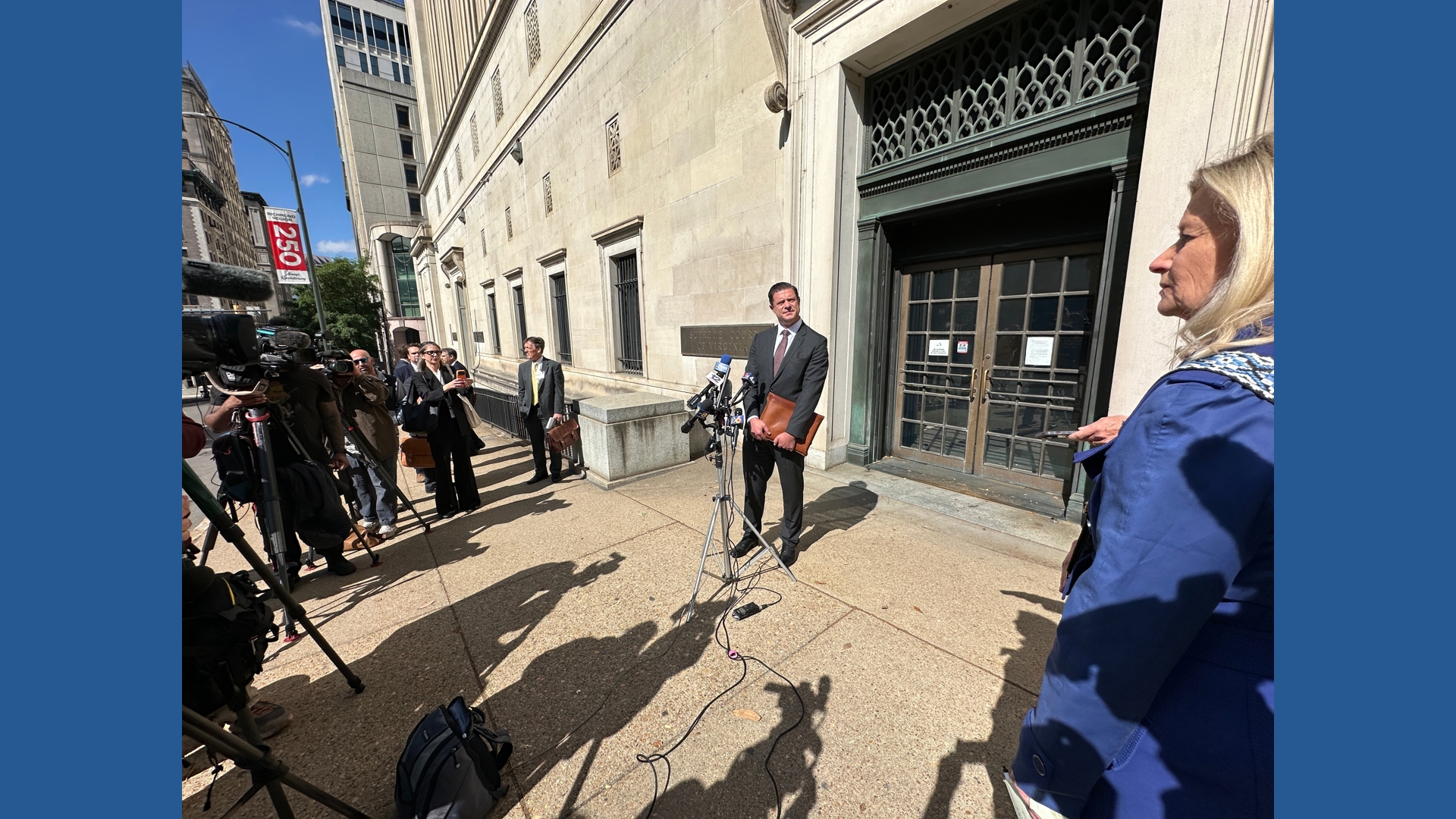
The court’s decision hinges on distinguishing between outcome and intent. If the map was drawn without accessing party registration data or election results, and instead relied on neutral criteria—population equality, municipal boundaries, and geographic continuity—then the partisan outcome may be incidental, not intentional.
Precedent here is thin. Most state courts have struck down maps drawn by legislatures, not ones ratified by voters. This case could redefine how much weight citizen initiatives carry when they clash with judicial interpretations of constitutional language.
Legal Precedents and Judicial Philosophy at Play
Virginia’s judiciary has historically deferred to legislative maps—until recently. The 2021 court-drawn map was itself controversial, with critics accusing justices of favoring GOP interests under the guise of neutrality. Now, with a slightly altered bench—Governor Glenn Youngkin, a Republican, appointed several justices—the ideological balance is in flux.
Yet the court’s reputation for impartiality is on the line. Overturning a voter-endorsed map would invite accusations of anti-democratic overreach, especially if the justification rests on outcome-based analysis rather than proof of deliberate partisan intent.
Other states offer cautionary tales. In Ohio, the Supreme Court repeatedly rejected Republican-drawn maps for partisan bias, citing both process and outcome. In North Carolina, a state supreme court reversal flipped the map landscape overnight—until a subsequent court shift restored GOP-favored lines. These swings erode public trust.
Virginia has a chance to set a steadier course. The key precedent may come from its own constitution: Article II, Section 6, which emphasizes that districts “shall be composed of contiguous and compact territory” and “reflect the diversity of the Commonwealth.”
If the court upholds the map, it affirms that demographic reality—not political balance—is the proper compass. If it blocks the map, it risks positioning itself as the final arbiter of fairness, overriding the will of the people in the name of a rigid interpretation of neutrality.
Practical Effects: What’s at Stake Beyond Partisan Advantage
This isn’t just about who wins more seats. The map’s fate shapes real representation.
Under the current 7–3 Democratic-leaning map: - Communities of color in Richmond and Hampton Roads gain stronger voice. - Northern Virginia’s growing influence in national politics is better reflected. - Competitive districts decline, but voter alignment with district outcomes improves.
Critics argue fewer competitive races weaken accountability. But data suggests most U.S. House races are safe regardless of map design. In 2022, only 17 of 435 House seats changed party—proof that competition is the exception, not the norm.
A more pressing concern: stability. Virginia has operated under three different congressional maps in four years. Constant redistricting confuses voters, burdens local election offices, and weakens incumbent accountability.
Blocking the voter-approved map would extend that instability. It could send the process back to the General Assembly—or even back to court-appointed mapmakers. Each delay risks disenfranchisement, especially with 2026 elections looming.

The Democratic Dilemma: Can a Map Favoring One Party Still Be Fair?
Yes—but with conditions.
A map can lean toward one party and still be fair if: - It follows neutral criteria (compactness, contiguity, respect for jurisdictions). - It avoids cracking or packing communities to dilute votes. - It does not use partisan data in drawing lines.
The Virginia map under review meets these standards on paper. It was developed by the Virginia Citizens Redistricting Commission (VCRC), a bipartisan body established by the 2020 amendment. The VCRC used no party affiliation data, focusing instead on census blocks, road networks, and community input.
For example: - Fairfax County remains largely intact, split only where necessary for population balance. - The Richmond-Petersburg corridor is unified, preserving a Black-majority district. - Southwest Virginia’s rural stretches are grouped logically, avoiding jagged boundaries.
The Democratic tilt arises not from manipulation but from clustering: Democrats dominate urban cores, and those areas are now kept whole. Republicans remain strong in rural areas, but those regions have slower growth and less political weight.
This reflects a broader national trend. As urban-rural polarization deepens, geographically faithful maps will increasingly produce lopsided partisan outcomes—even when drawn fairly.
What a Ruling Could Mean for Future Redistricting
The Virginia Supreme Court’s decision will echo beyond state borders.
If it upholds the voter-approved map: - It empowers citizen-led redistricting nationwide. - It validates demographic accuracy over artificial balance. - It may encourage other states to adopt similar independent or public-review models.
If it strikes down the map: - It sets a precedent that outcomes matter more than process. - It could chill future ballot initiatives on redistricting. - It reinforces judicial control over a process meant to be removed from politics.
States watching closely include Michigan, Colorado, and Arizona, all of which have independent commissions. If Virginia’s court overturns a map drawn without partisan data but with a lopsided result, those states may face new legal challenges—even if their processes are transparent and fair.
The irony? A ruling against the Virginia map could push the state back into the very partisan cycle voters sought to escape.
A Closing Test of Democratic Faith
The Virginia Supreme Court doesn’t just hold the fate of 11 congressional seats. It holds the credibility of a reform movement.
Voters demanded an end to backroom mapmaking. They participated in hearings, submitted proposals, and ratified a solution. To override that process—not because of corruption or procedural failure, but because the outcome leans left—would undermine the promise of citizen-driven government.
Fairness isn’t symmetry. It’s adherence to rules, transparency, and respect for communities. By those measures, the current map passes.
The court’s duty isn’t to balance power between parties. It’s to uphold the constitution—and the people’s right to shape their representation within it.
Let the map stand. Let the voters’ voice be final.
FAQ
What should you look for in Virginia Supreme Court Weighs Fate of Voter-Approved House Map? Focus on relevance, practical value, and how well the solution matches real user intent.
Is Virginia Supreme Court Weighs Fate of Voter-Approved House Map suitable for beginners? That depends on the workflow, but a clear step-by-step approach usually makes it easier to start.
How do you compare options around Virginia Supreme Court Weighs Fate of Voter-Approved House Map? Compare features, trust signals, limitations, pricing, and ease of implementation.
What mistakes should you avoid? Avoid generic choices, weak validation, and decisions based only on marketing claims.
What is the next best step? Shortlist the most relevant options, validate them quickly, and refine from real-world results.