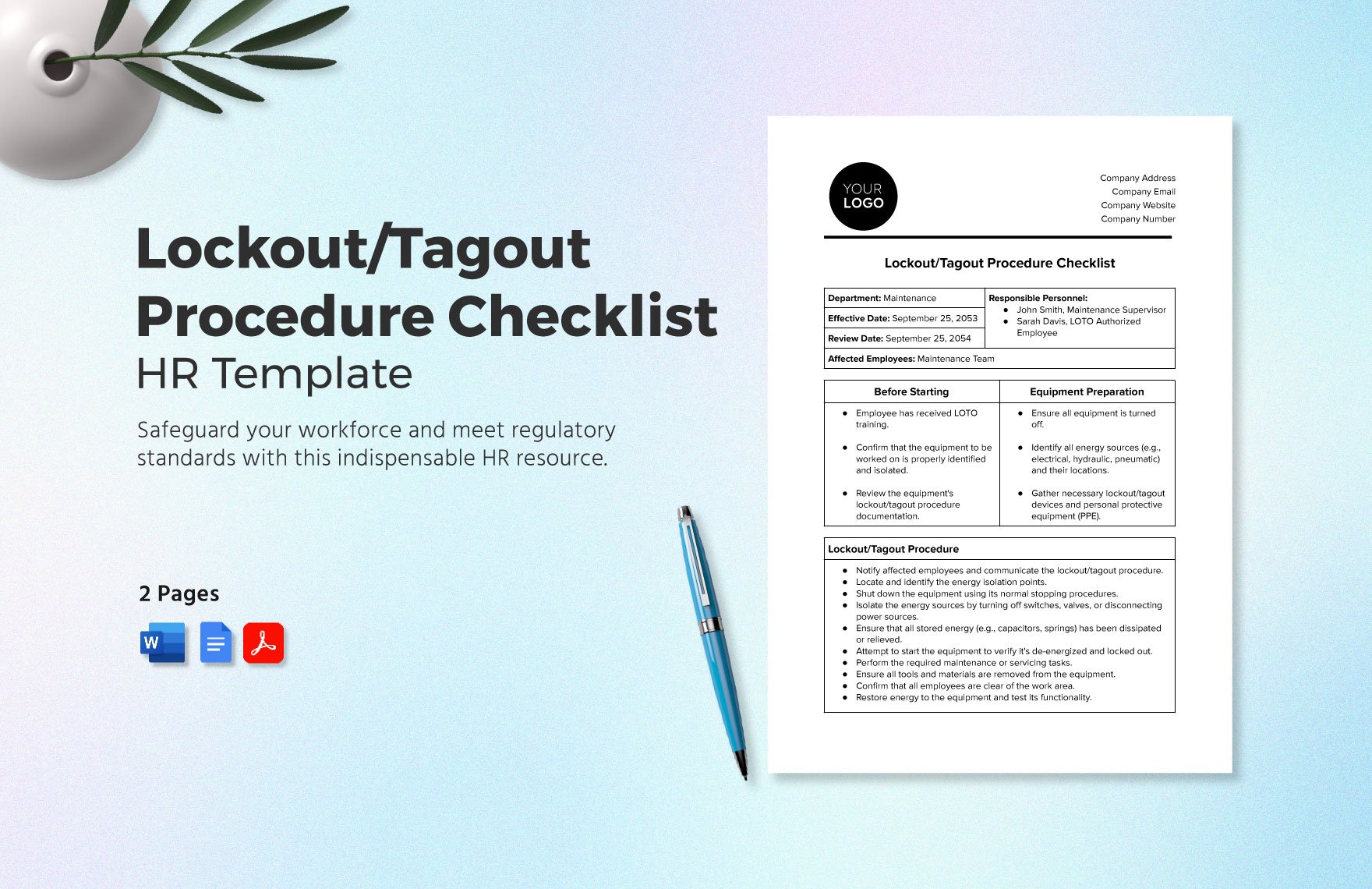
Every year, hundreds of workers suffer serious injuries—or worse—because machinery was accidentally energized during maintenance. The solution isn’t complex, but it must be precise: a clear, documented lock out tag out (LOTO) procedure. At the heart of any effective energy control program is a reliable lock out tag out procedure PDF. It’s not just paperwork—it’s a lifeline.
OSHA’s standard 29 CFR 1910.147 outlines the requirements for controlling hazardous energy, and a well-structured LOTO PDF ensures your team follows every step correctly. This guide walks you through what a proper LOTO procedure PDF should include, how to use it, and where to find or create one that fits your operation.
Why a LOTO Procedure PDF Is Non-Negotiable
A LOTO procedure PDF standardizes safety across shifts, teams, and equipment types. Without it, workers rely on memory or verbal instructions—both high-risk approaches. Consider this real-world scenario:
At a Midwest manufacturing plant, a maintenance technician was clearing a jam in a conveyor system. Another worker, unaware of the repair, restarted the machine from a remote panel. The result: a crushed hand and a six-figure OSHA fine. An accessible LOTO procedure PDF could have prevented it.
The PDF serves as: - A training tool for new employees - A reference during maintenance - Proof of compliance during audits - A foundation for incident investigations
When done right, the document eliminates ambiguity. It answers: Who locks? What gets locked? When is it safe to work? And how do you verify isolation?
Key Elements of an Effective LOTO Procedure PDF
Not all LOTO PDFs are created equal. A generic template won’t protect your team if it doesn’t match your equipment and workflow. Here’s what every LOTO procedure PDF must include:
1. Equipment Identification Clearly state the machine or system covered—down to the model number if possible. Use diagrams or photos if helpful. Example: “This procedure applies to Model X2000 Hydraulic Press, Serial #HP-78890.”
2. Energy Sources Identified List every type of energy involved: electrical, pneumatic, hydraulic, gravitational, chemical, thermal. For a CNC machine, this might include: - 480V electrical supply - Compressed air lines (90 psi) - Hydraulic reservoir under pressure - Spring-loaded components
3. Step-by-Step Shutdown Sequence Break down the shutdown process into numbered actions:
- Notify affected employees.
- Shut down the machine using the normal stop button.
- Isolate the main power disconnect.
- Close hydraulic valves and bleed residual pressure.
- Release stored energy (e.g., lower suspended loads).
4. Lockout and Tagout Application Specify:
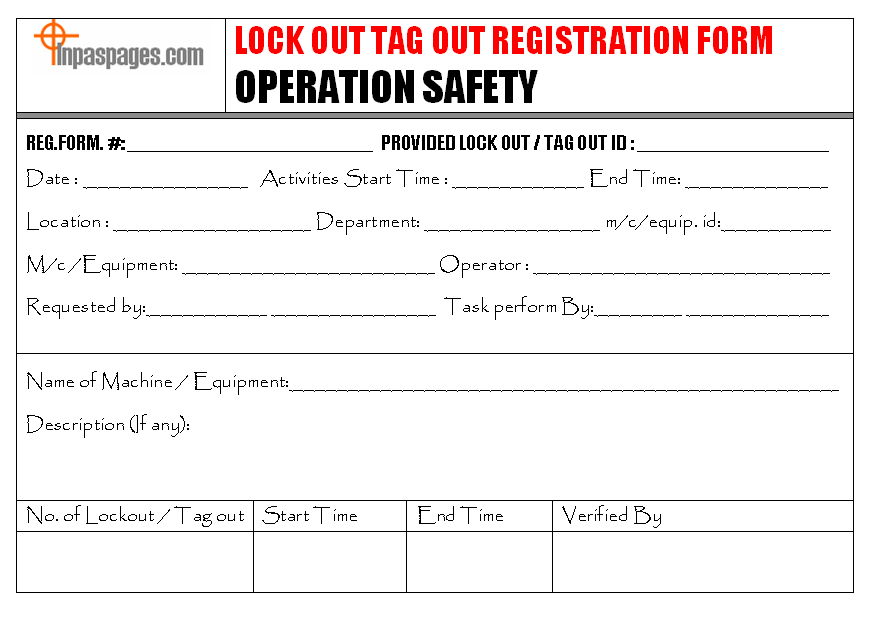
- Who applies locks (authorized employee only)
- Type of lock (e.g., hasp, valve lock, circuit breaker lockout)
- Where tags are placed (tags must include name, date, reason)
Example tag text: “DO NOT OPERATE – Under Maintenance. John Doe, 04/05, Replacing Drive Belt.”
5. Verification of Isolation
This is the most critical—and often skipped—step. The PDF must require positive verification: - Test the machine’s start controls after isolation - Use a voltage tester on electrical circuits - Confirm zero pressure in lines
Never assume. Always test.
6. Restoration Procedure Detail how to safely return the machine to service:
- Remove tools and guards
- Notify all affected employees
- Remove locks and tags (only by the person who applied them)
- Restore energy gradually
Common Mistakes in LOTO Procedure PDFs
Even experienced safety teams make errors that undermine their LOTO programs. Here are the most frequent flaws and how to fix them:
Mistake 1: Using One Template for All Machines A boiler is not a conveyor. A laser cutter has different risks than a packaging line. Each machine needs its own tailored LOTO PDF.
Fix: Create equipment-specific documents. Group only similar machines (e.g., all centrifugal pumps) under one procedure if energy sources and shutdown steps are identical.
Mistake 2: Vague Language Phrases like “turn off the power” or “secure the system” are dangerous. They leave room for interpretation.
Fix: Be explicit. Use precise verbs: “Open the main disconnect switch (Device #M1),” or “Close and lock isolation valve V-12.”
Mistake 3: Skipping Verification Steps
Many PDFs list “verify isolation” but don’t explain how. This leads to complacency.
Fix: Add a checkbox: “Test start button—machine must not energize.” Include PPE requirements for verification (e.g., voltage-rated gloves).
Mistake 4: Not Reviewing or Updating Equipment changes. Procedures don’t. A five-year-old LOTO PDF may not reflect a retrofit or new control panel.
Fix: Audit all LOTO PDFs annually. Update after any machine modification.
How to Create Your Own LOTO Procedure PDF
You don’t need expensive software—just attention to detail. Follow this workflow:
Step 1: Conduct an Energy Audit Walk through each machine. Identify every energy source. Use a checklist: - Electrical panels - Pneumatic lines - Hydraulic accumulators - Gravity-fed components - Stored chemical energy
Step 2: Map the Control Points Note the location and type of every disconnect, valve, or bleed point. Photograph them. Label them if possible.
Step 3: Draft the Procedure Use clear, active language. Format for readability:
- Bold headers
- Numbered steps
- Warning boxes for high-risk actions
Avoid technical jargon. The goal is clarity, not complexity.
Step 4: Test the Procedure Have an authorized employee follow the draft PDF during a maintenance task. Time it. Note any confusion or missing steps.
Step 5: Finalize and Distribute Save as a PDF. Store it:
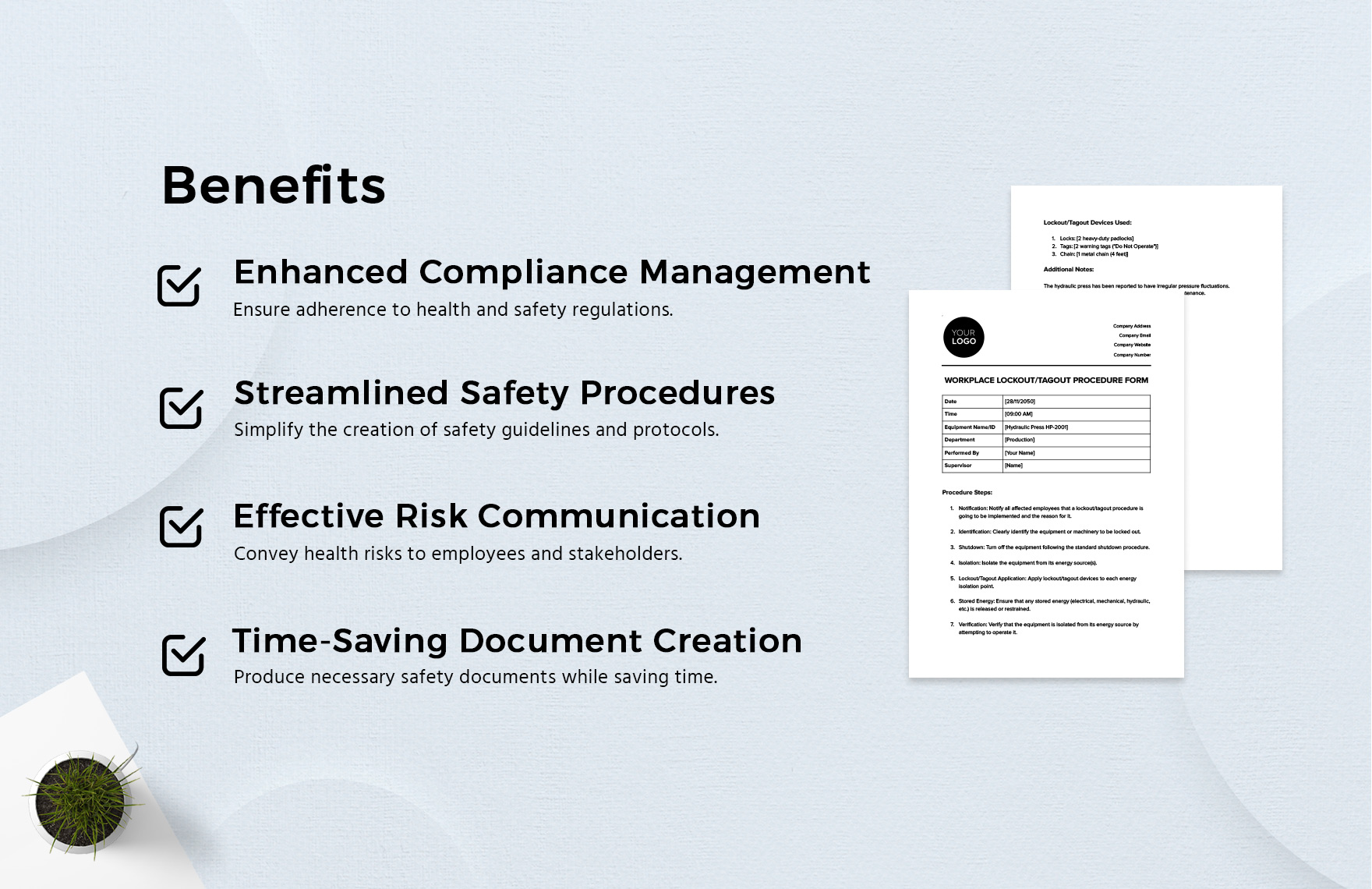
- On-site in a labeled binder
- On the company intranet
- In a mobile safety app (if used)
Ensure every authorized employee can access it—even on a tablet in the plant.
Where to Find Reliable LOTO Procedure PDF Templates
While custom procedures are best, templates can accelerate development. Here are five trusted sources for LOTO procedure PDFs:
| Source | Features | Best For |
|---|---|---|
| OSHA.gov | Free, OSHA-compliant templates | Government-standard reference |
| National Safety Council (NSC) | Editable PDFs, industry-specific | Manufacturing, healthcare |
| Grainger | Downloadable, visual-heavy templates | Facilities with limited safety staff |
| SafetySkills (by Vivid Learning) | Interactive PDFs with quizzes | Training integration |
| Creative Safety Supply | Multilingual, customizable | Multi-language workplaces |
Use these as starting points—but always customize. A boiler room in Texas has different needs than a food processing line in Wisconsin.
Integrating LOTO PDFs Into Daily Operations
A PDF on a server does nothing. It must be part of the workflow.
Training Include the LOTO procedure PDF in onboarding. New technicians should read it, follow it, and explain it back.
Accessibility Print and laminate a copy near each machine. Use QR codes linking to the digital version.
Audits During safety audits, ask: “Can you show me the LOTO PDF for this press?” If the answer is no, you’ve got a problem.
Digital Tools Some companies use EHS software that hosts LOTO procedures. Workers scan a machine QR code and instantly pull up the correct PDF on their phone.
One auto parts plant reduced LOTO errors by 70% after switching from binders to digital access.
Real-World Example: LOTO PDF in Action
At a paper mill in Oregon, a daily maintenance task involves cleaning the dryer section. The machine has: - 600V electrical supply - Steam lines at 150 psi - Rotating drums
Their LOTO procedure PDF includes: - A shutdown checklist with 12 steps - A photo of the main disconnect labeled “LOCK HERE” - A warning: “Steam lines must cool for 20 minutes before work” - A verification step: “Use thermal gun to confirm <100°F”
During a surprise OSHA inspection, the auditor reviewed the PDF, watched a technician follow it, and marked the site as compliant. The plant avoided a citation—and more importantly, kept workers safe.
Final Steps: Make Your LOTO Procedure PDF Work for You
Don’t treat your lock out tag out procedure PDF as a compliance checkbox. Treat it as a living safety document. Review it. Test it. Improve it.
- Start today:
- Pull your current LOTO PDFs.
- Audit one high-risk machine procedure.
- Walk through it with a technician.
- Update based on real feedback.
A well-crafted LOTO procedure PDF doesn’t just meet OSHA—it protects people. That’s what safety is really about.
FAQ
What should you look for in Lock Out Tag Out Procedure PDF Guide for Safety Teams? Focus on relevance, practical value, and how well the solution matches real user intent.
Is Lock Out Tag Out Procedure PDF Guide for Safety Teams suitable for beginners? That depends on the workflow, but a clear step-by-step approach usually makes it easier to start.
How do you compare options around Lock Out Tag Out Procedure PDF Guide for Safety Teams? Compare features, trust signals, limitations, pricing, and ease of implementation.
What mistakes should you avoid? Avoid generic choices, weak validation, and decisions based only on marketing claims.
What is the next best step? Shortlist the most relevant options, validate them quickly, and refine from real-world results.